🚢 Maritime Health

Your medical team can't board.
Your monitoring can.

Arblu consolidates the health assessment you ran before boarding with what the crew member reports at sea, and tells you which of your chronic cases need your specialist team this week — not once it's already an emergency.
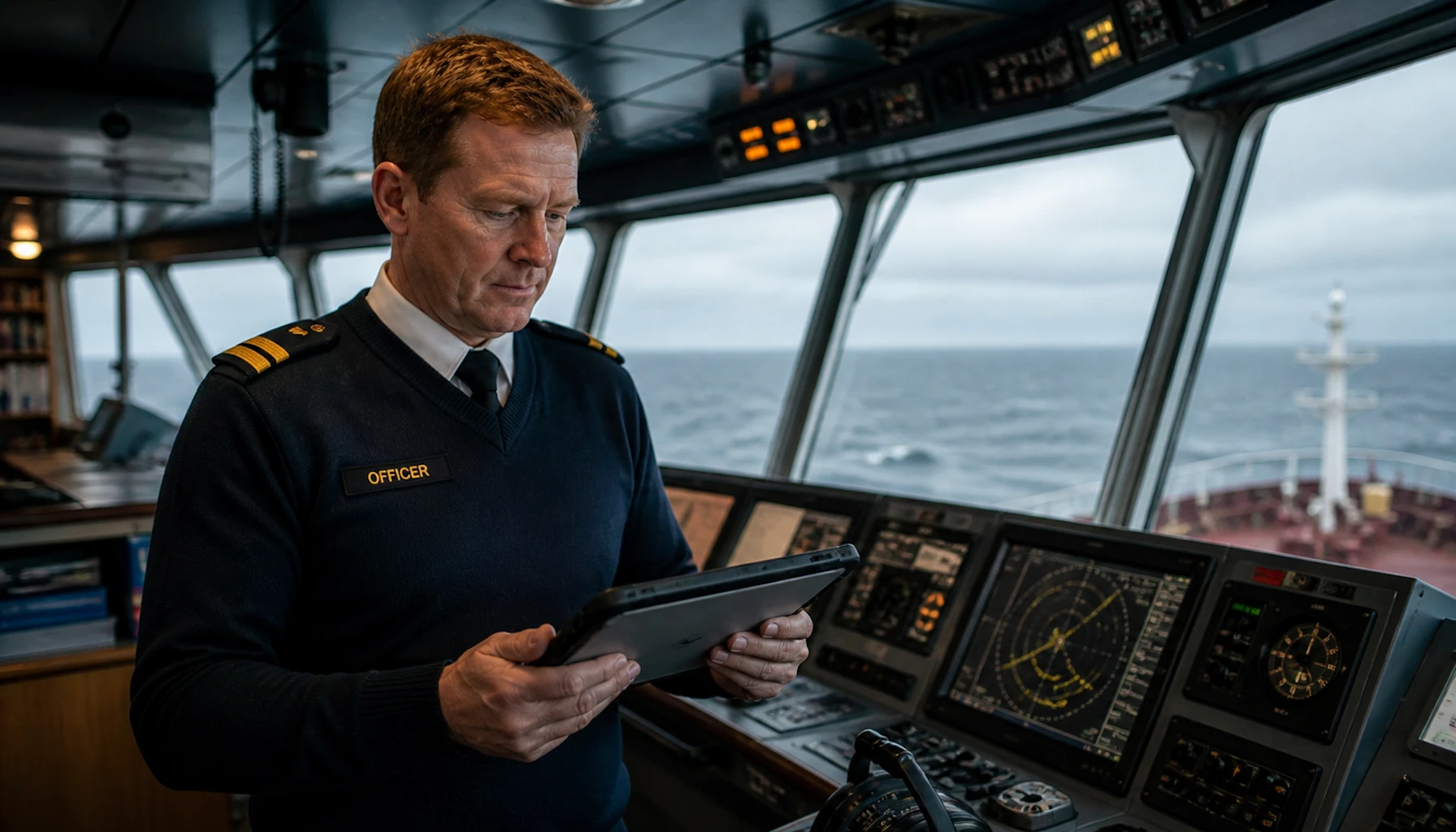
Maritime officer on navigation bridge reviewing crew health dashboard on tablet
Who uses Arblu

Three parties. One single source of truth.

In the maritime business, crew health passes through three different hands, and today each one sees only its own fragment. Arblu connects them without changing anyone's role.

01
🩺
The health provider
Arblu's customer

Assesses crew members before boarding, defines their treatment plan, and provides telemedicine. With Arblu it gets the platform where all that information is consolidated, along with shipowner and crew administration and the analytics modules.

02
The crew members
End user

They receive an email with their check-in and answer on a secure website, from the vessel. No apps to install and no paperwork: following up on their hypertension or diabetes no longer depends on remembering at the next port.

03
🛳️
The shipowners
End user

They get their own web view with the overall monitoring status of their chronic crew. They can see risk is under control, without accessing anyone's clinical detail.

What's at stake

A crew member who decompensates costs twice.

First the medical disembarkation, which the shipowner pays for. Then the crew member who doesn't sign on again — and training a replacement costs too.

The medical disembarkation

Taking a sick crew member off a vessel under way is the costliest contingency a shipowner faces: route deviation, transfer, shore-side care, and a position to cover mid-campaign.

The crew member who doesn't return

Someone who felt poorly cared for on board does not sign on for the next campaign. Trained experience walks away, and replacing it costs time and money.

3–5

Days to deploy Arblu — nothing installed on ships and no IT project involved

How it works

From the pre-boarding assessment to your team's decision.

01
📥
Before boarding

Your company uploads the crew member's initial health assessment to the platform. That becomes their baseline: everything that follows is compared against it.

02
✉️
On board, every check-in

The crew member gets an email with a link to a check-in on a secure website. They answer from the vessel, over the connection the ship already has.

03
🧬
Everything in one profile

Arblu consolidates both sources — what you assessed ashore and what the crew member reports — together with the rest of the follow-up touchpoints.

04
🎯
The cases that matter

The platform classifies risk and shows you who to review proactively. Your specialist team spends its time on the cases that need it.

What your company gets

The platform your medical team doesn't have today.

🚦
Risk measured against their own baseline

Green, amber, or red based on how each crew member compares to their own history, not to a population average. What's normal for one can be an alert for another.

🔕
Silence is data too

If a crew member stops answering their check-ins, their risk level escalates automatically. At sea, non-response is exactly the signal you cannot afford to miss.

📊
Analytics modules

Adherence, risk evolution, and behavior across the entire fleet. The numbers you need to renew the contract with the shipowner.

👥
Shipowner and crew administration

Crew onboarding, offboarding, and rotation, organized by shipowner. Each of your clients sees their own and nothing else.

🔗
On top of your systems, not instead of them

Arblu is middleware: your telemedicine, your records, and your protocols stay as they are. What gets added is the intelligence layer that's missing today.

🚢
Nothing to install on ships

Arblu runs entirely from shore. The crew member only needs their email and a browser; the vessel needs no new equipment.

For maritime health providers

Let's start with one fleet.

Tell us how many chronic crew members you monitor today and which shipowners you work with. The pilot deploys in 3–5 days, without touching your systems.